The ranchers.

Meatha and Ben — two generations, two cultures, one fence line. The story behind the beef.

This is the story of a Thai woman and an American man who, between them, decided that Thailand should be able to put a steak on a table that was every bit as good as anything coming out of Texas, Tokyo, or the Australian outback. And then they actually did it.

The Thai side

Photo of Meatha at the ranch · save as meatha.jpg

I'm Meatha. I grew up around cattle. In Thailand, that means small herds, mixed-breed animals, hand-fed and walked to market — not the industrial American picture. I knew animals from the ground up, the way every Thai farm kid does, but I had never seen what world-class beef genetics could do until I started working with Ben.

"You cannot fake a good plant. Or a good animal. They tell on you."

That has always been true on Thai farms. The difference is what we have done with the truth.

The American side

Ben grew up in Texas, the son of cattlemen. He came to Thailand and saw what most foreigners see — and most ignore — that Thailand has the climate, the labor, the local feed inputs, and the cultural patience to produce extraordinary beef, but no one was actually doing it at the level the country could support. The bottleneck was discipline, not capability.

So we started building. We brought in genetics — culminating in the 2023 World Champion Black Wagyu bull who anchors our breeding program now. We built our own grow-out and finishing program, anchored on a 120-day final ration of high-fat peanut and cashew powder. We built our own harvest facility, our own chill room, our own cold-cutting floor, and our own sub-zero shipping protocol.

Why we judge cattle shows

Photo of cattle judging or mentorship · save as judging.jpg

We judge cattle shows in Thailand and abroad. We mentor young Thai cattlemen — boys and girls from farming families who want to take what they grew up with and turn it into a real industry. This work is meant to be passed on. Not to our sons and daughters specifically — though that may happen — but to the next generation of Thai ranchers, period. The country has the capability. We're trying to pass on the discipline.

What you taste when you taste Thai Beef

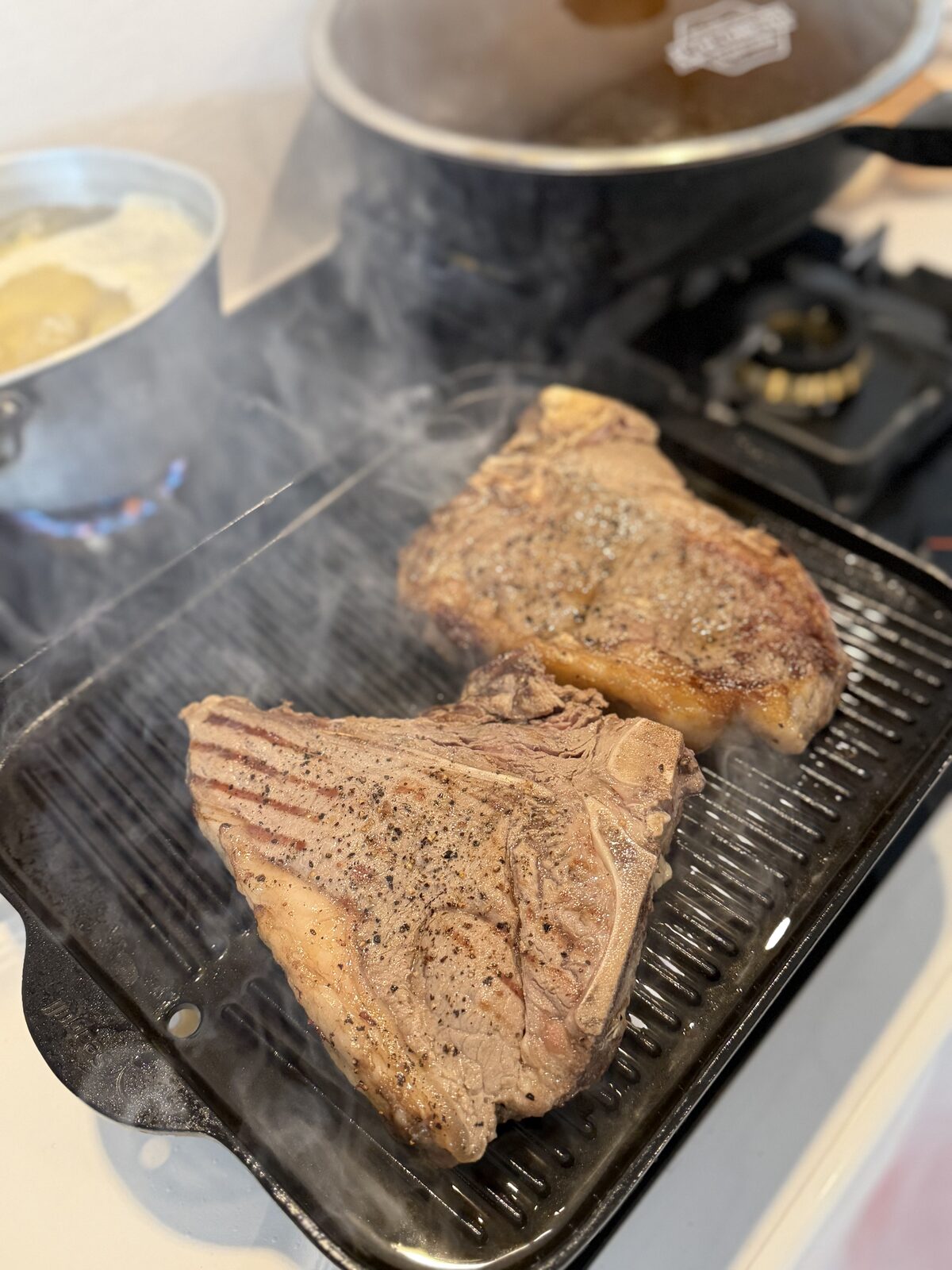
You taste pasture. You taste the peanut-cashew finish. You taste the genetics of cattle who had champion bloodlines on both sides. You taste the patience of a one-week sterile cure before any blade touched the meat. You taste a cold chain that never broke from harvest to your kitchen.

Mostly, you taste the absence of shortcuts. There is no marbling shortcut. There is no flavor shortcut. There is no cold-chain shortcut. Other producers will tell you they have one — they don't.

— Meatha & Ben Cunningham
Owners · Ranchers · Cattlemen

The two traditions

Thai pastoral. American precision.

We didn't pick one tradition over the other. We took what each does best, and let the rest go.

From Thailand

Patience. Local feed. The deep, unhurried relationship between rancher and animal. The understanding that an animal that has been treated badly produces meat that tastes badly, and that this is not a metaphor.

From America

Grading discipline. Genetic record-keeping. Cold-chain rigor. The willingness to throw out a carcass that didn't grade where it should have, instead of selling it as if it had.

Come see for yourself.

Ranch tours by appointment. The restaurant is open most evenings. Both worth the trip.